How to price a lash fill: costs, time and profit margin
 By the DaySync team. Drafted with Lissa, our AI writing assistant.
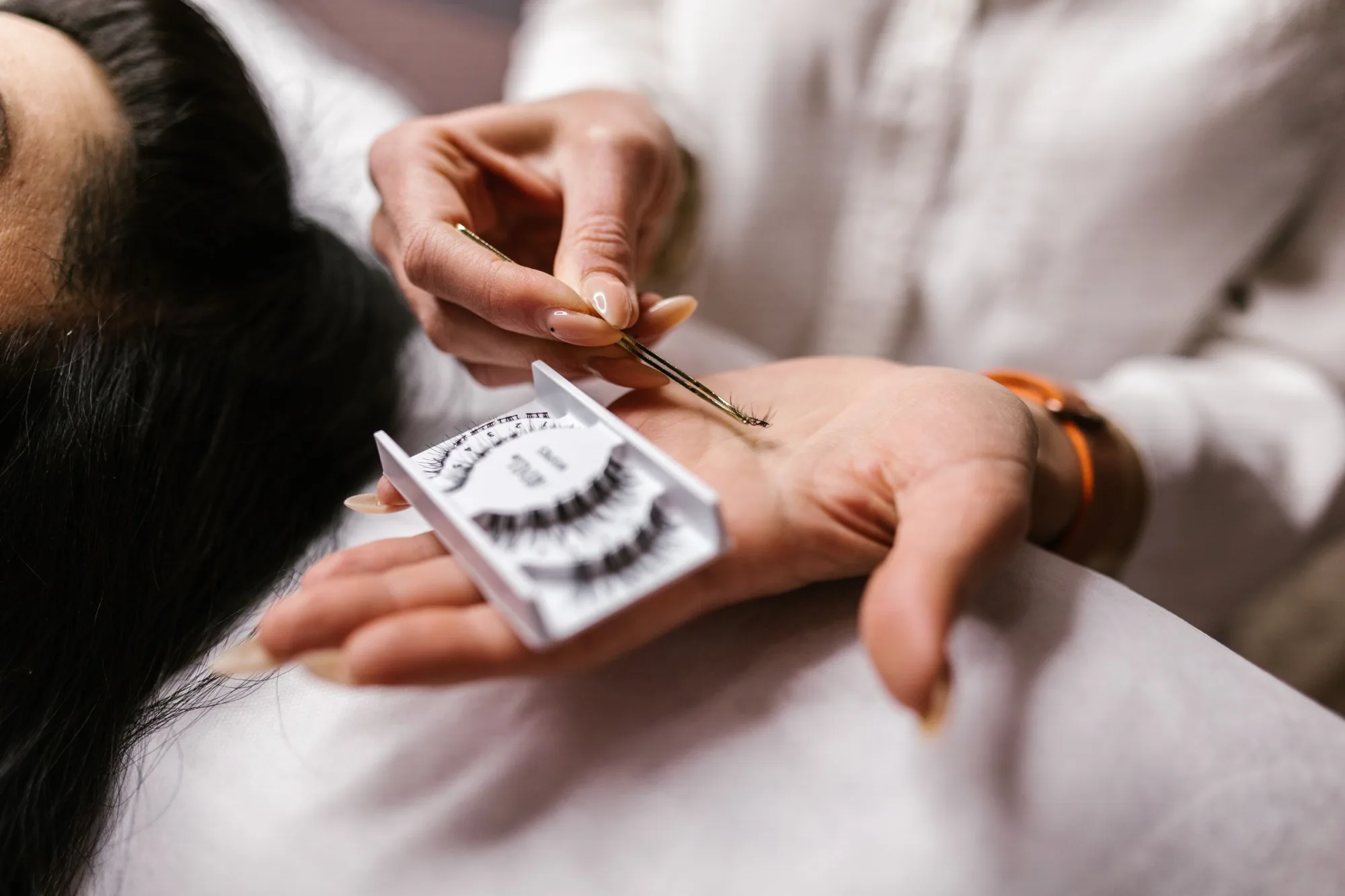
A nearby studio's price is useful context, but it does not tell you whether a lash fill covers your costs. Start with materials, the time you reserve and your share of monthly expenses. Then choose a price you can explain and review.
To price a lash fill, add materials, a labor allowance and overhead for the time reserved. For a target margin, divide that cost by 1 minus the margin as a decimal. Add costs not included in your estimate.
The USD figures below are hypothetical examples, not recommended prices or local market averages. Use your own costs and currency.
1. Estimate materials per appointment
Use purchase prices and the quantity you actually consume. Include lashes, adhesive, pads, tape, cleanser and other items used for the service. Allow for waste rather than assuming every item in a pack is usable.
For this example:
- Lashes: $2.75
- Adhesive: $0.75
- Other consumables: $2.50
- Materials total: $6
Check several appointments if your usage varies. Follow the manufacturer's storage and replacement instructions for products; do not extend their usable life to reduce the estimate.
2. Count the time you reserve
Include consultation, checking how the extensions have lasted, the fill itself and cleanup. Suppose a 60-minute treatment occupies 75 minutes in the schedule. That is 1.25 hours you cannot sell to someone else.
At an illustrative target of $40 per hour for your work, the labor allowance is 1.25 × $40 = $50. This allowance is not take-home pay after personal tax. Include other labor-related costs where they apply.
3. Allocate monthly overhead
Suppose rent, insurance, software and other shared expenses total $600 a month. If you expect 100 occupied appointment hours, overhead is $6 per hour, or $7.50 for this appointment.
Use hours you realistically expect to sell, not every hour the room is available. If you only sell 60 hours, the same overhead becomes $10 an hour. Avoid counting supplies both here and in the materials line.
4. Choose margin or markup deliberately
The example cost is $6 + $50 + $7.50 = $63.50.
A 20% markup adds 20% of cost: $63.50 × 1.20 = $76.20.
A 20% margin on the selling price uses a different calculation: $63.50 ÷ 0.80 = $79.375, or $79.38 rounded to cents. At $80, $16.50 remains after the costs included above.
| Item | Amount |
|---|---|
| Materials | $6.00 |
| Labor allowance (1.25 h × $40) | $50.00 |
| Overhead (1.25 h × $6) | $7.50 |
| Cost | $63.50 |
| Price at 20% markup | $76.20 |
| Price at 20% margin | $79.38 |
This is a planning margin, not a guaranteed net profit. Add applicable taxes and costs missing from the example. If a payment provider charges a percentage fee, calculate it on the selling price. If cost is C, target margin is m and the fee rate is f, use price = C ÷ (1 − m − f). Use decimals and a positive denominator; this simplified model excludes taxes and fixed transaction fees.
Your calculation: materials [ ] + labor allowance [ ] + allocated overhead [ ] = cost [ ]. Target margin [ ]%. Estimated price before additional fees and taxes [ ].
5. Compare services and explain the price
Compare the amount left per occupied hour for a fill and a full set. A cheaper service may still work well if it takes less time; a longer appointment needs enough revenue to cover the time it uses.
Check local offers with similar service scope and experience. If your calculated price is hard to sustain, review costs, demand and the service you provide before changing it. Do not assume that being cheaper will fill your calendar.
In your booking description, explain what a fill includes and when a client may need a different service. Review your calculation when material prices, rent or appointment times change. Keep each service's price, duration and description together so you can review the offer when costs change. See how DaySync's online booking page presents services to clients.